Temporary warehouse cooling uses rental fans, air coolers or portable air conditioning to address occupied work areas without starting with a permanent installation. For Singapore warehouse teams, the first step is to identify the workstations needing attention, then ask Air Guru which equipment suits their ventilation, access and operating conditions.
Plan temporary warehouse cooling around people and tasks
Start with a work-area map rather than an equipment count. Mark packing benches, checking tables, loading interfaces and any enclosed supervisor room separately, because these are different rental enquiries. Add the hours when each area is occupied and where staff report discomfort; an empty storage aisle should not automatically receive the same attention as a continuously occupied station.
Ask the people using each area what changes during a shift. Record whether doors stay open, stock moves across the proposed equipment position, or a nearby process introduces heat. These observations give the rental discussion a practical starting point without assuming that every part of the warehouse needs the same machine.
The UK Health and Safety Executive’s general guidance on thermal comfort considers air movement, humidity, radiant heat, clothing and work rate alongside air temperature. Use those factors as prompts when describing the space. The source explains general principles; it does not establish Singapore workplace rules or certify a particular rental arrangement.
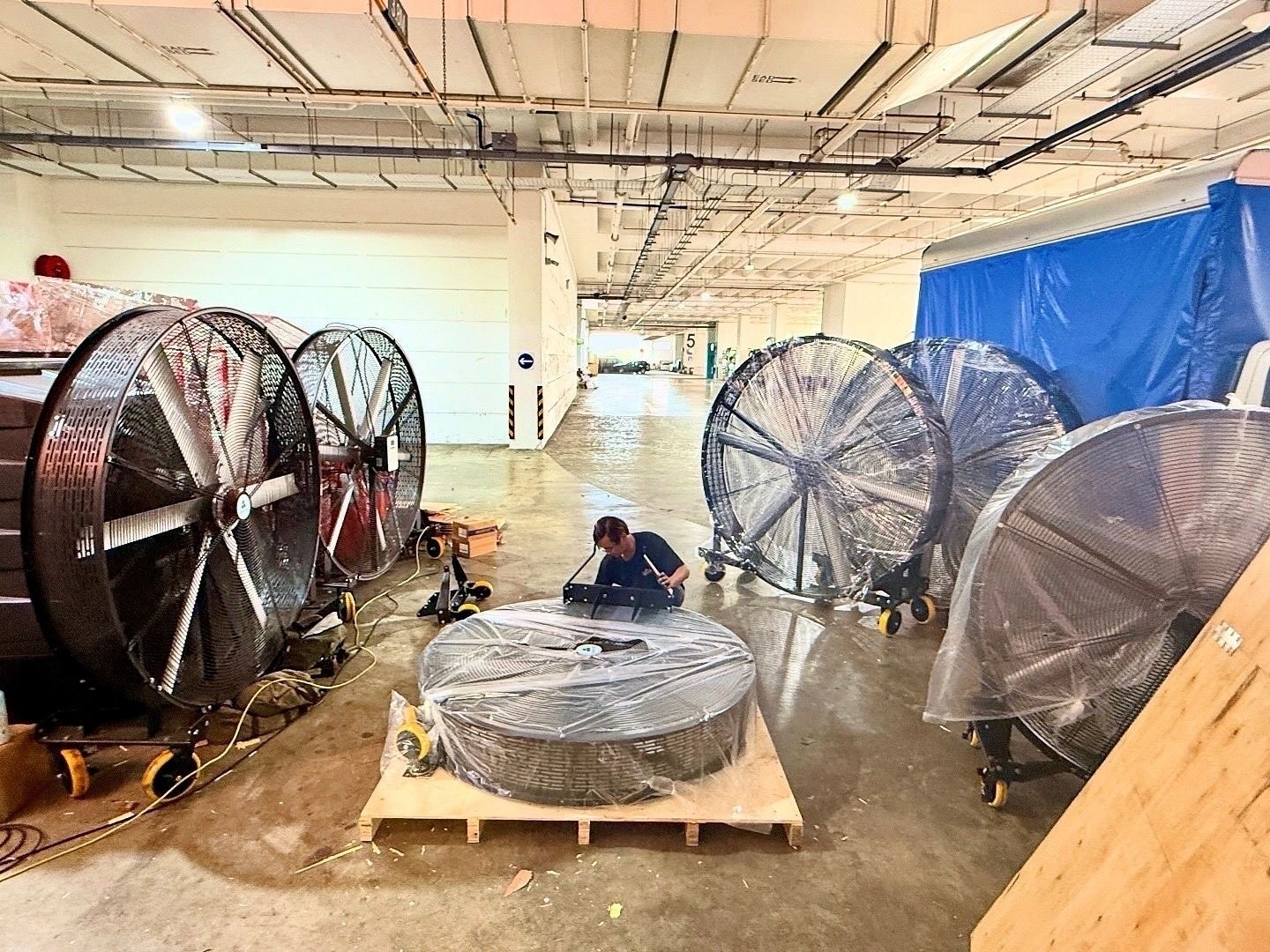
When should you discuss industrial fans?
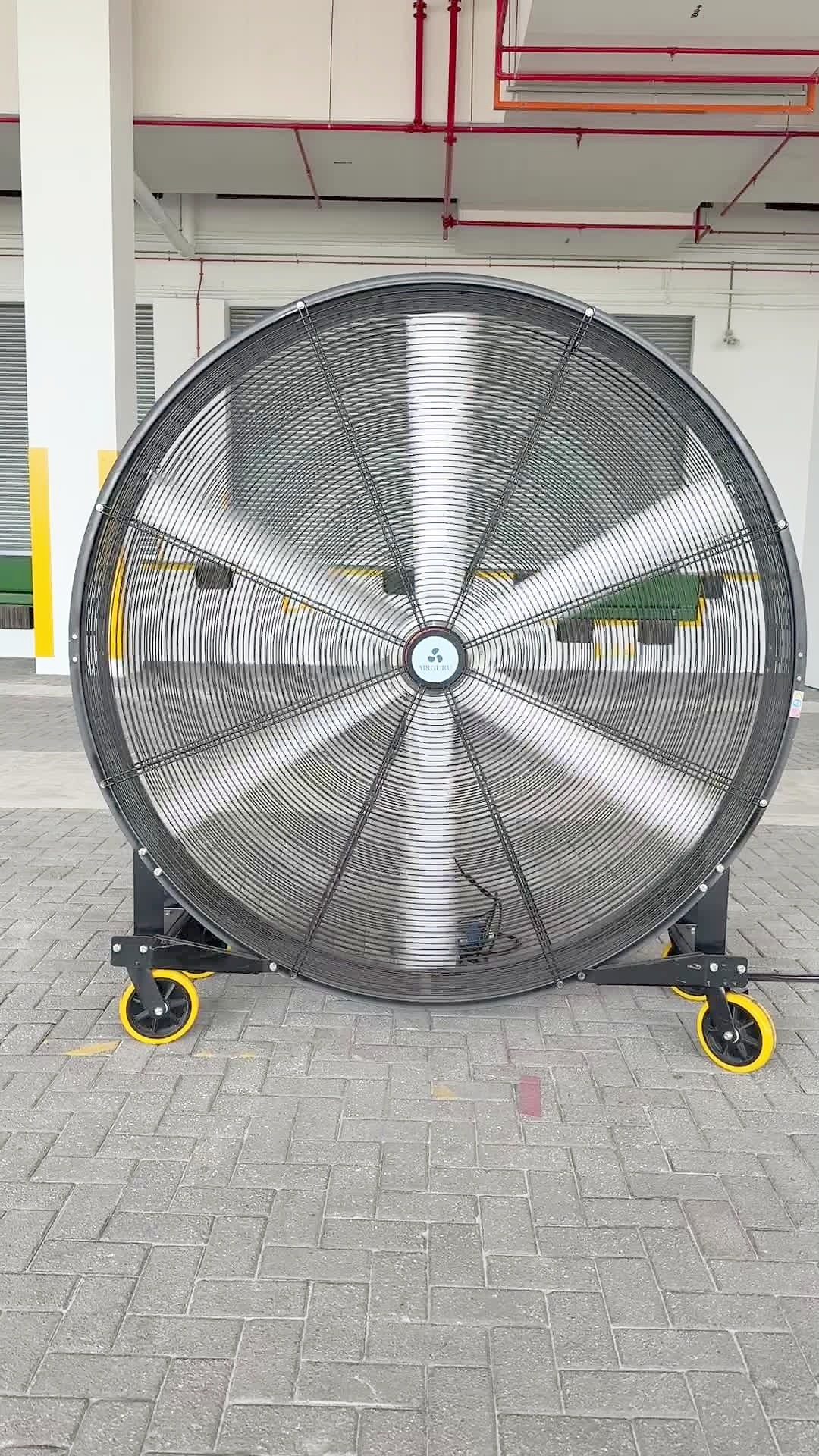
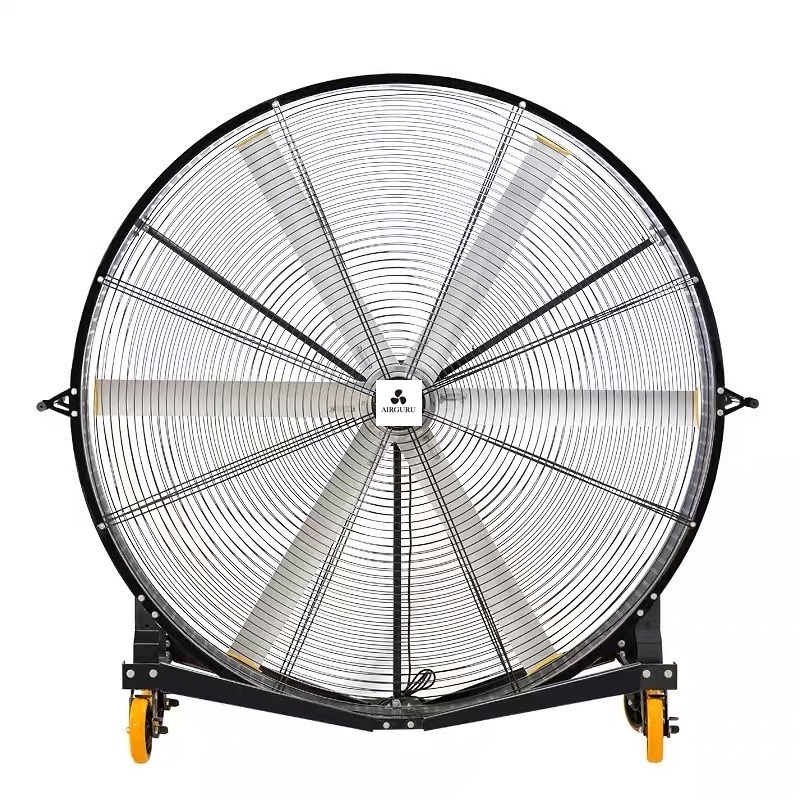
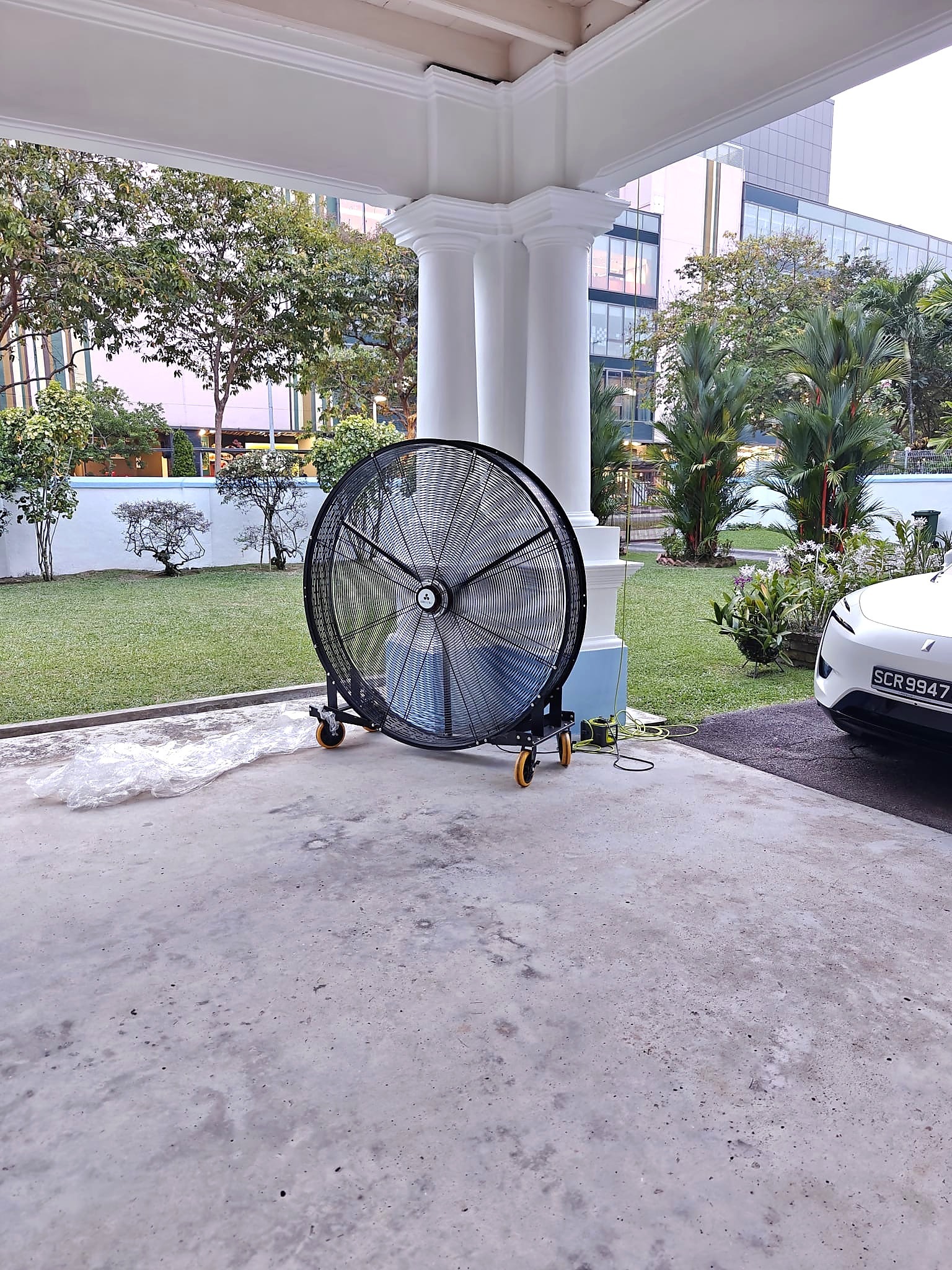
Discuss industrial fans when the enquiry centres on air movement across an occupied area. Air Guru offers industrial giant fan rental; ask the team to relate the proposed model and position to the actual workstation layout. A photograph of a fan alone cannot establish its suitability for your particular warehouse.
Draw the intended airflow direction on the work-area map. Show shelves, screens and stacks between the proposed fan position and the people it is intended to serve. During the discussion, include any lightweight packaging or documents at the bench so the working arrangement can be considered together with the airflow requirement.
Also photograph the floor footprint available beside the workstation. Request the dimensions of the proposed unit and compare them with the usable location, rather than judging scale from a product image. Include access for normal work and equipment handling when you explain that location to the rental team.
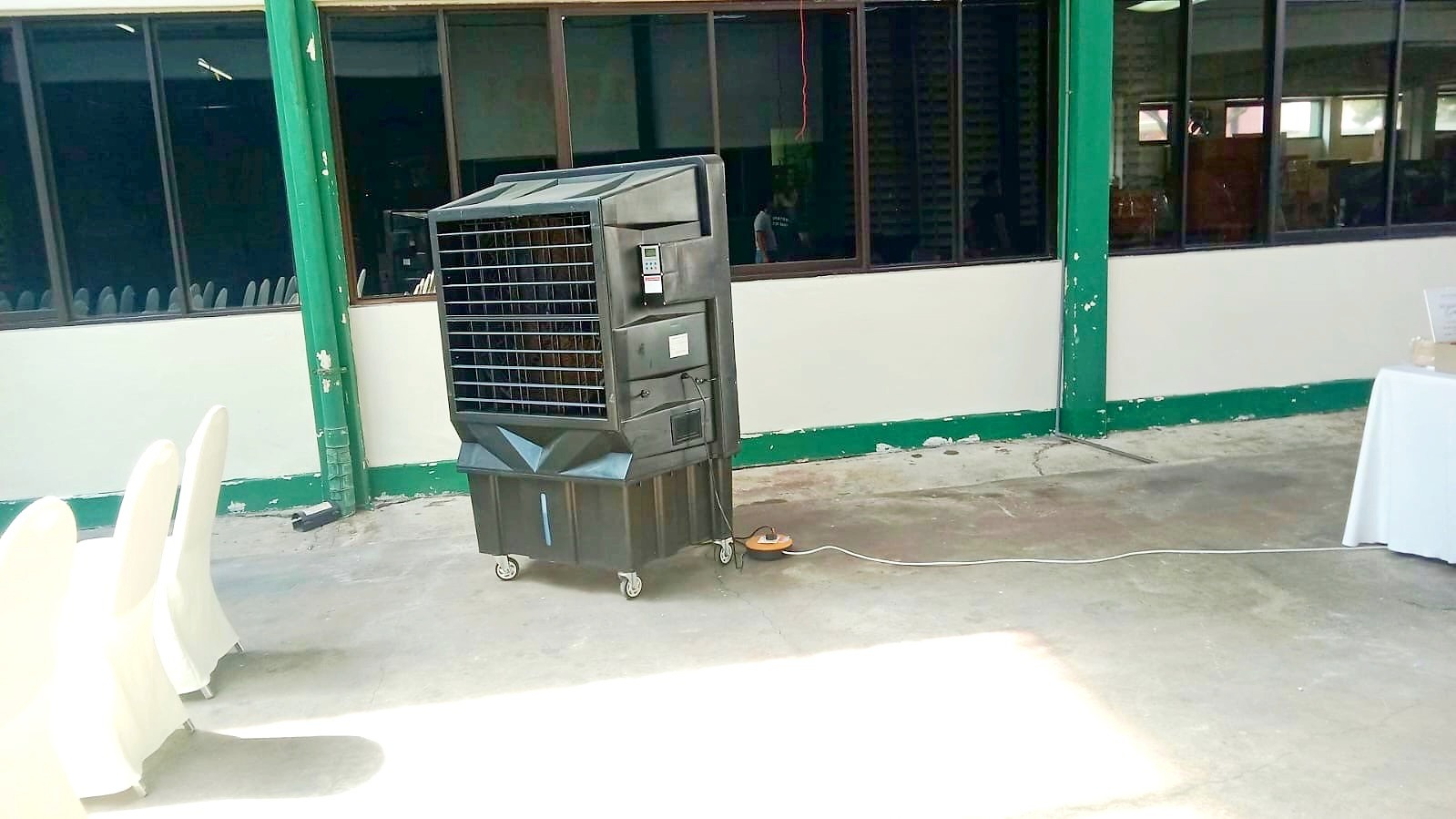
Is an evaporative cooler suitable for the space?
An evaporative cooler needs a discussion about ventilation and humidity, not just whether the floor can accommodate it. Honeywell’s official air-cooler guidance explains that these appliances use water evaporation and add moisture; their cooling effect depends on surrounding conditions. Those principles help frame an enquiry, but Honeywell’s model specifications should not be assumed to describe Air Guru’s equipment.
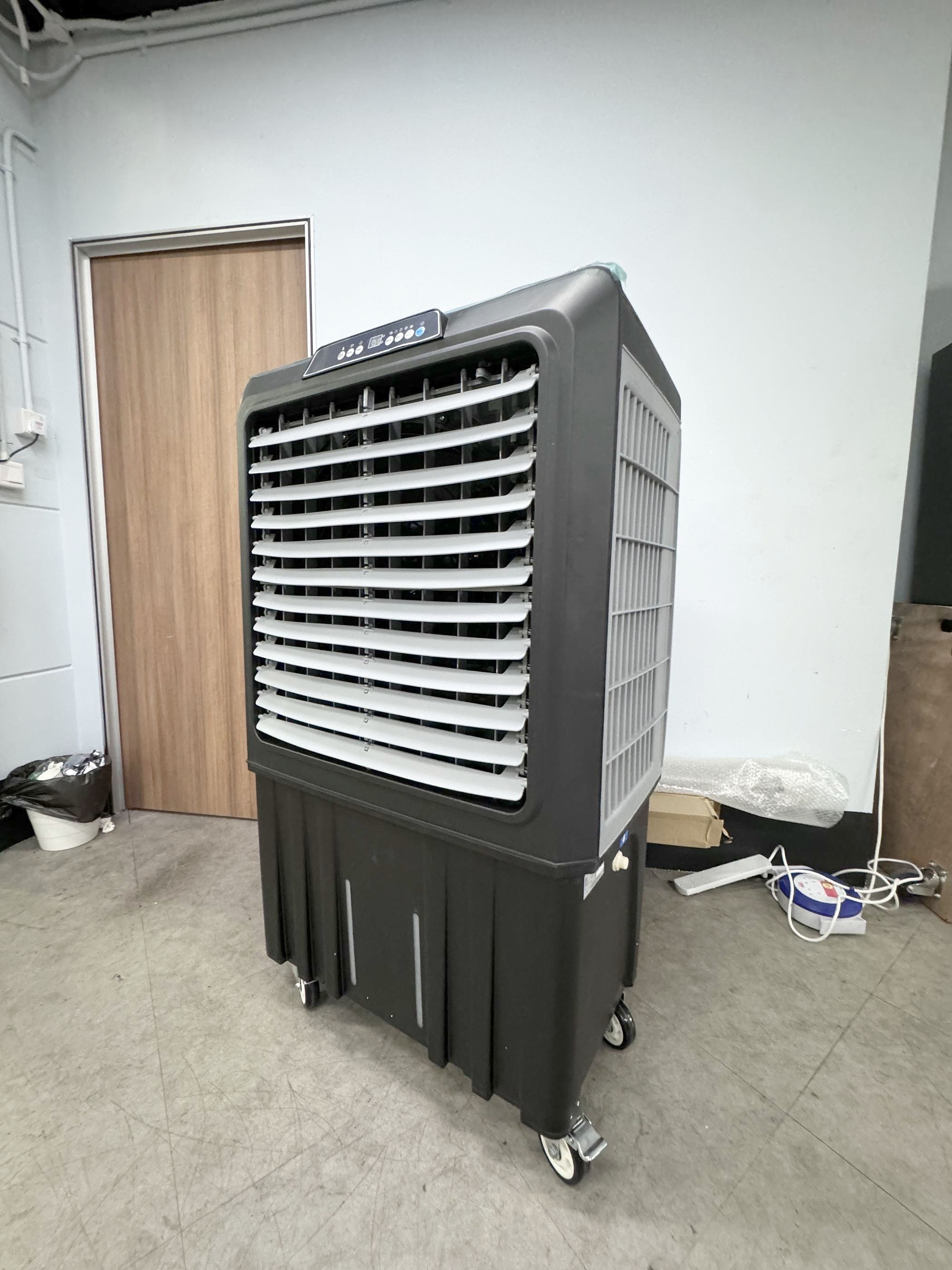
When discussing air cooler rental, say whether the work area is open-sided, connected to other spaces or normally enclosed. Explain how its doors are used during operations. Ask Air Guru to confirm whether the proposed cooler is appropriate for that arrangement before choosing it from appearance or tank size.
Include the practical operating questions in the same conversation: where water would be obtained, who would handle any required refilling, and what instructions apply to the supplied unit. Ask for the actual model’s requirements rather than adopting a generic refill schedule from another product. This gives the person receiving the equipment something concrete to check.
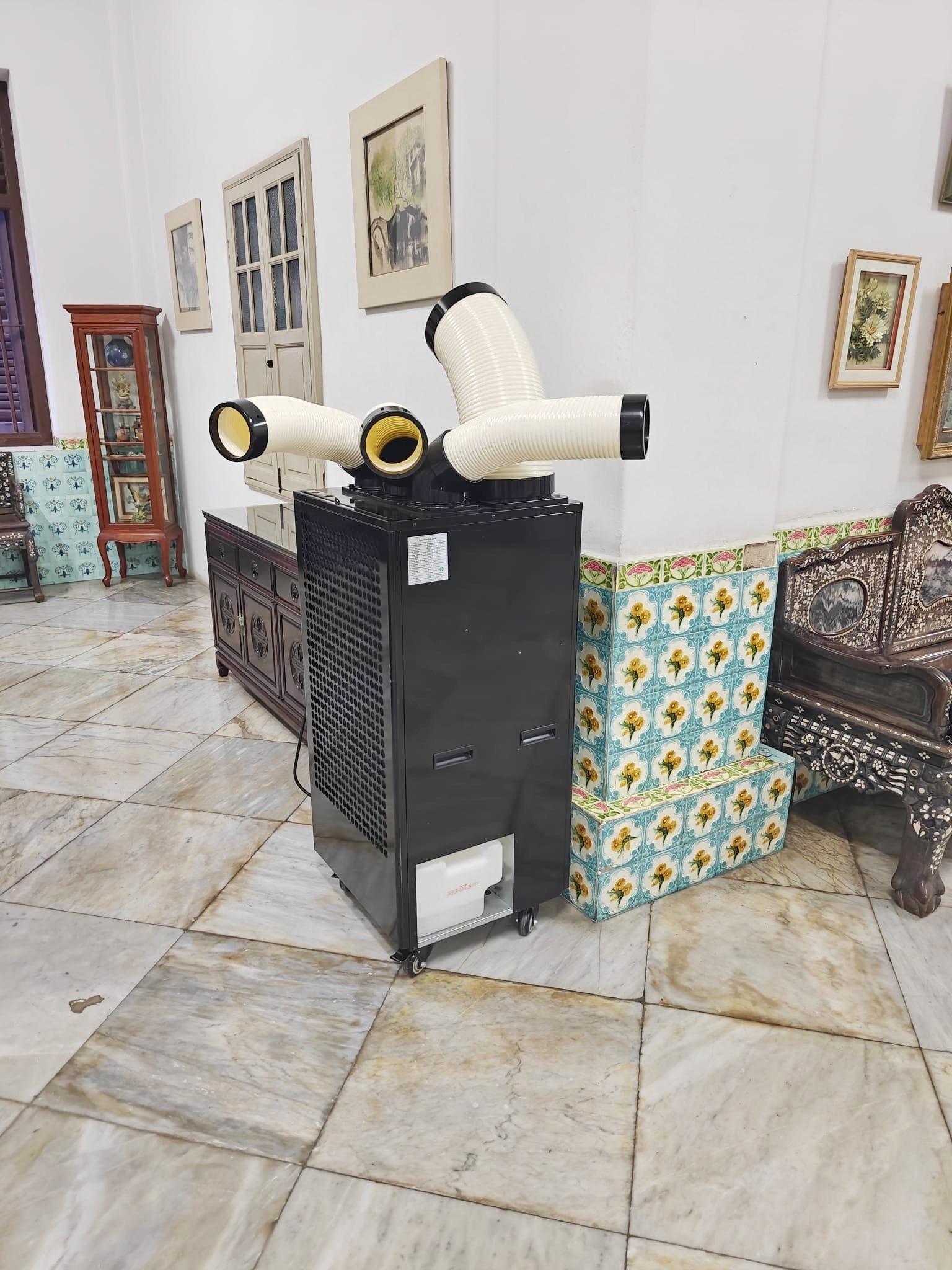
Where does portable spot air conditioning fit?
Portable air conditioning is worth discussing when the requirement is a defined occupied zone or a separate room. Air Guru offers portable aircon rental. Describe the target space and intended outcome so the team can assess the application; do not assume one portable unit will condition an entire warehouse.
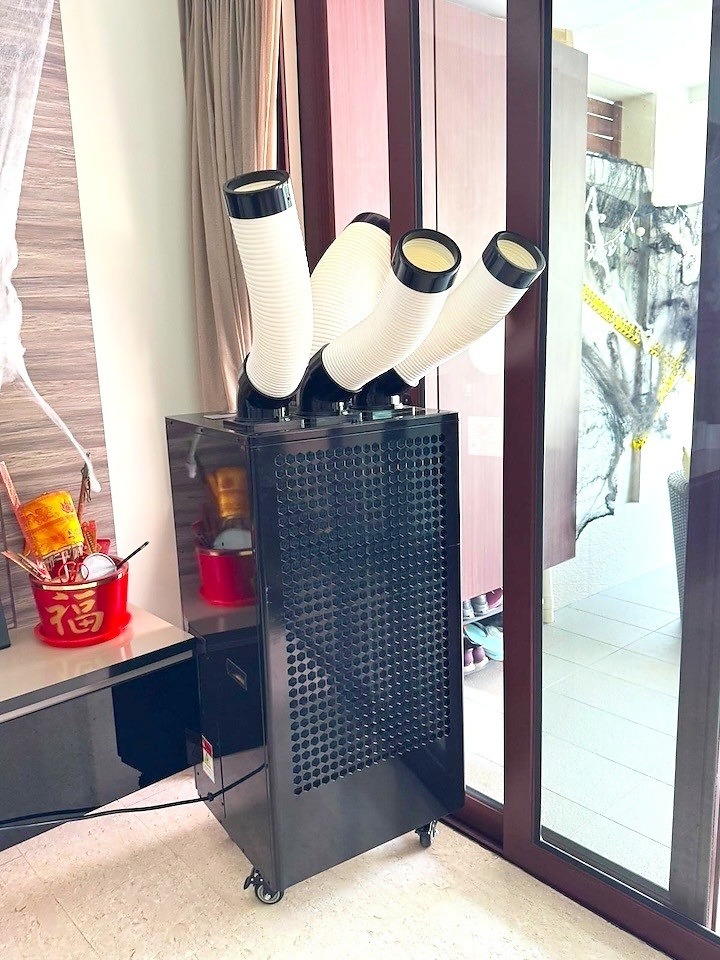
For a proposed spot-cooling position, identify where the supply air should go and ask how the chosen unit handles its rejected heat and condensate. For an enclosed room, provide its dimensions and explain how often people open the door. These are questions for the specified equipment and site arrangement, not details that can be established from a photograph of its outlets.
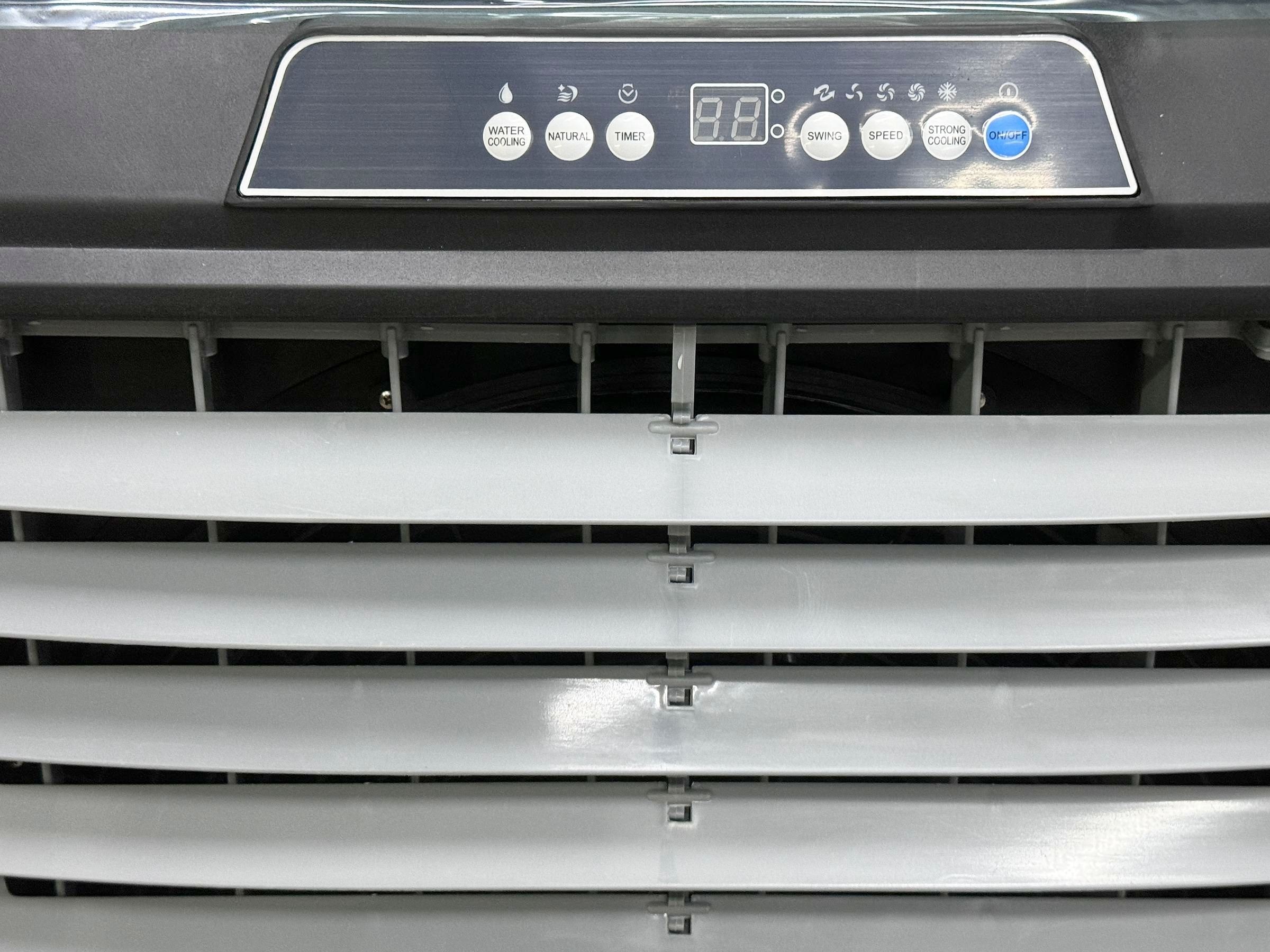
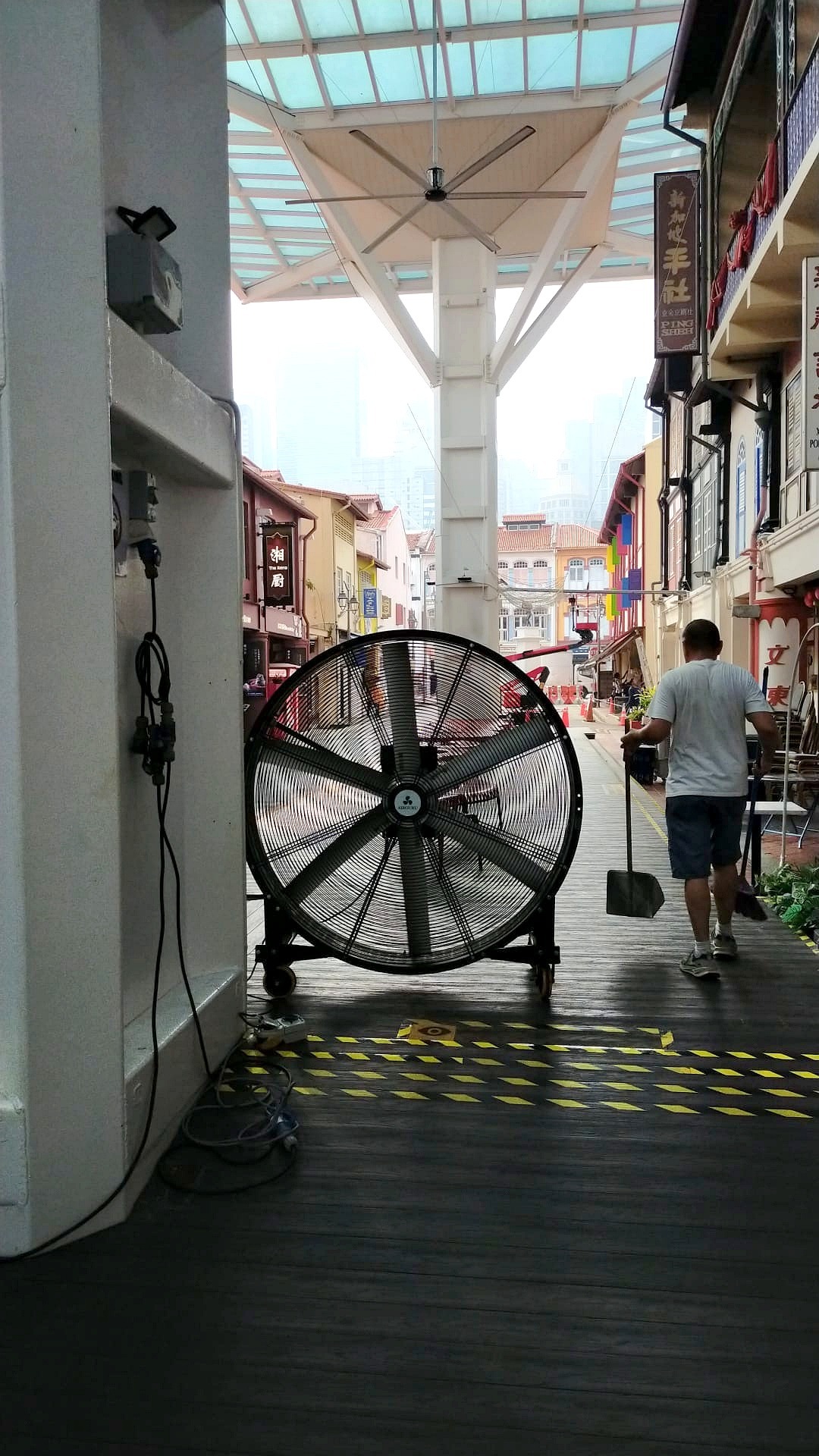
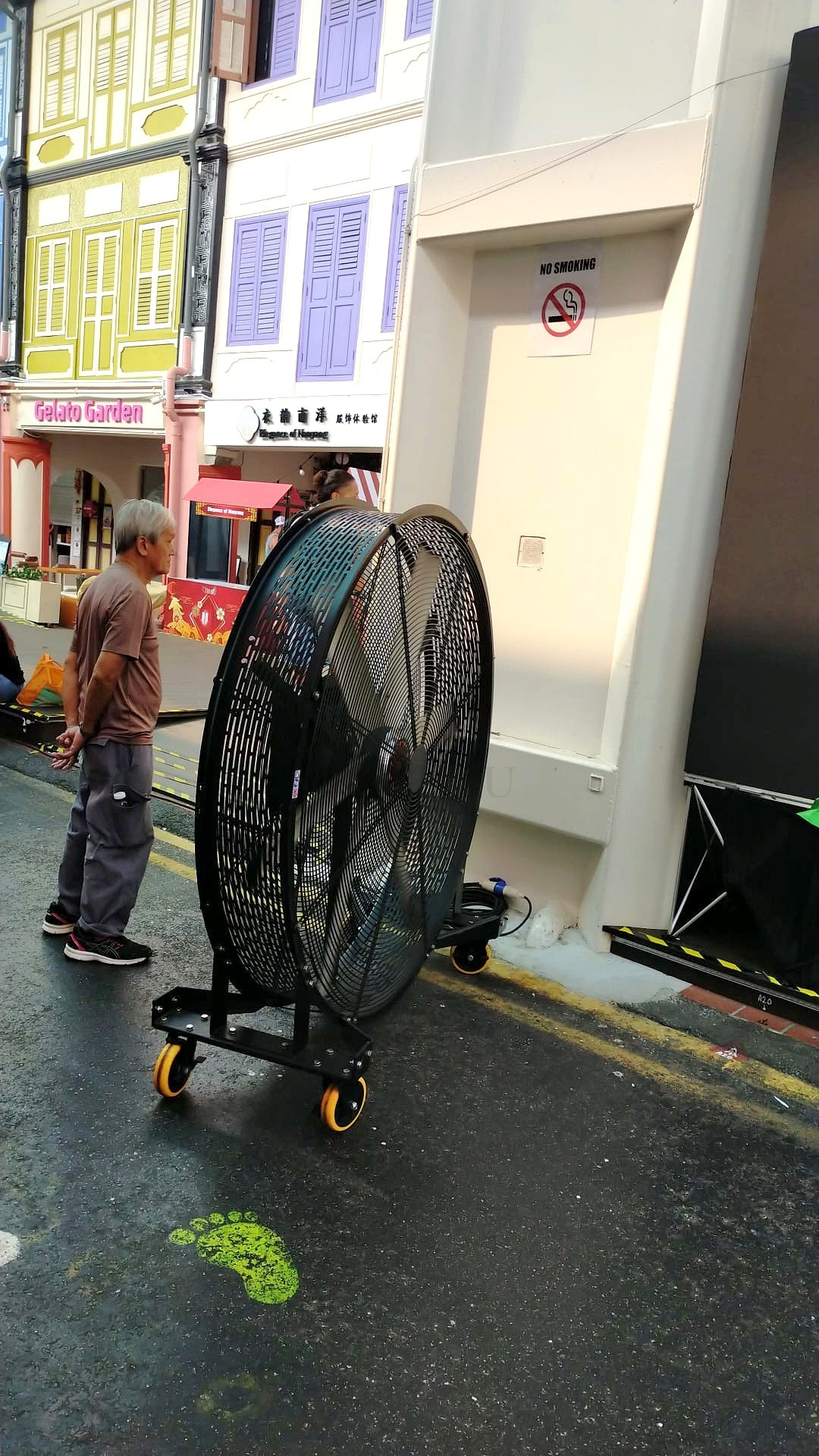
The photographs here illustrate equipment and physical features, including examples in other settings. They are not a case study, a record of a named warehouse installation or a recommended installation diagram. Use them to clarify which type of equipment you mean when requesting a quotation.
What should the equipment handover cover?
Ask for a model-specific explanation of the controls, operating arrangements and shutdown procedure. The person receiving the rental should know which settings were agreed for the intended area and whom to contact if the arrangement needs review. Avoid treating another unit’s control panel as instructions for the machine delivered to you.
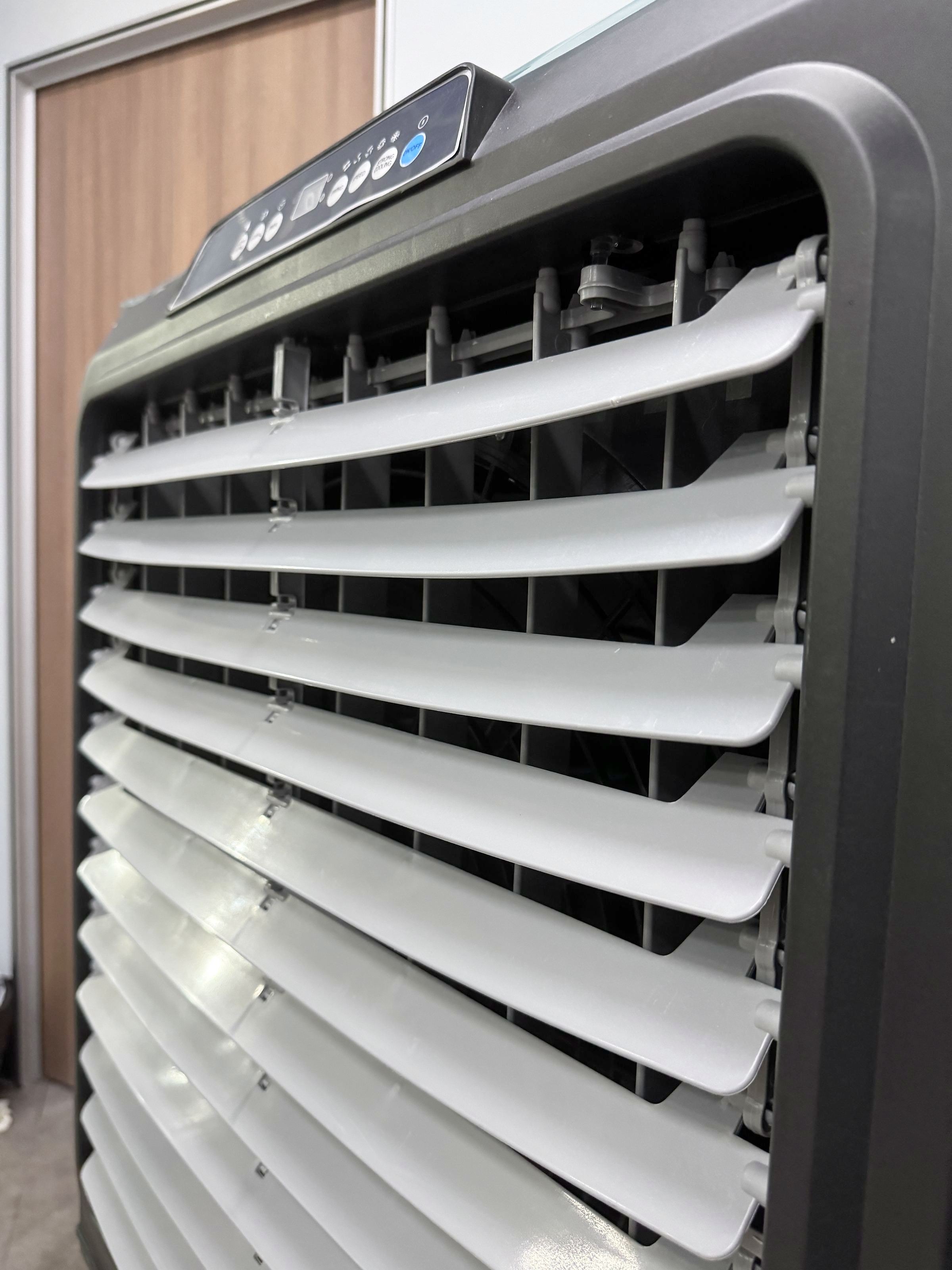
For example, a cooler may show separate speed, swing or water-cooling controls, while a fan or portable air conditioner has a different operating interface. Ask which controls staff may adjust and which settings should be checked with the rental team first. Record that explanation with the model details so it remains available across shifts.
Before confirming the hire, discuss the proposed power connection with the site’s responsible facilities person and obtain the equipment’s electrical requirements. Also identify the delivery route, available unloading arrangements and the agreed location. Treat these as items to resolve for your site rather than inventing a standard socket, access width or installation time.
Compare quotations for the same work-area requirement
Send each quotation request the same description of the occupied area and intended rental period. If the layout is still changing, say which elements are provisional. Ask the supplier to identify the equipment proposed and any assumptions about the space, rather than comparing a bare machine count across different proposals.
| Item to discuss | Information to provide | Detail to request |
|---|---|---|
| Occupied zone | Workstations and operating hours | Proposed equipment and intended use |
| Site conditions | Openings, partitions and nearby heat sources | Suitability considerations for that arrangement |
| Access and position | Route photographs and available floor location | Unit dimensions and handling arrangements |
| Operation | Receiving contact and shift pattern | Handover instructions and operating responsibilities |
| Hire period | Required dates and possible changes | Confirmed scope, collection and extension terms |
Keep a copy of the agreed arrangement beside the quotation. If a workstation moves or the warehouse layout changes before delivery, send the revision to Air Guru. That allows the discussion to remain tied to the current work area instead of an earlier sketch.
Equipment views to use in your enquiry
The following photographs show fan footprints, cooler cabinets, outlet details and portable spot-aircon configurations. Refer to the relevant view when describing the equipment you are considering, then request confirmation of the actual available model. The surrounding venues in these images should not be taken as proof that an identical arrangement suits your warehouse.
Frequently asked questions
How do I choose the right air cooler for my space?
Describe the occupied area, openings and operating conditions before selecting an air cooler. Ask Air Guru to confirm the proposed model’s suitability and requirements; the physical size of a tank alone does not establish the cooling outcome.
How is an air cooler different from a standard fan?
A fan circulates existing air, while an evaporative cooler passes air through wetted media. For a warehouse enquiry, identify whether the need is air movement or a cooling application that requires further assessment of humidity and ventilation.
Are air coolers effective in humid environments?
Higher humidity limits evaporation, so the result depends on the surrounding conditions. Tell Air Guru about the work area’s ventilation and any humidity-sensitive goods before requesting an evaporative cooler.
Can I use an air cooler in a room without a window?
Do not assume that a windowless room is suitable for evaporative cooling. Describe its other openings and ventilation arrangements and ask for an equipment recommendation based on that specific space.
How is an air cooler different from an air conditioner?
Evaporative coolers use water evaporation; air conditioners use a refrigeration process and need an arrangement for rejecting heat. Specify the occupied zone and discuss the appropriate equipment instead of treating the two names as interchangeable.
Discuss your warehouse cooling requirement with Air Guru
For temporary warehouse cooling, send your work-area photographs, layout, operating hours and rental dates through Air Guru’s enquiry page. You can also email hello@airguru.com.sg or call Kier Tan on +65 8818 1029. Ask for a proposal tied to the identified work areas, with equipment details and the operating arrangements clearly stated.