Event cooling equipment includes fans, air coolers and portable aircon, but these options solve different problems. For a Singapore event, start with whether you need air movement around guests or cooling for a particular area. Share the location and intended use with Air Guru before choosing the equipment for your booking.
Which event cooling equipment should you compare?
Compare the cooling method before comparing the size of the machine. A large fan, an evaporative cooler and a portable air-conditioning unit are different categories, even when all three are supplied on wheels. Their suitability depends on the conditions and the result you need.
Air Guru offers industrial giant fans, air coolers, portable aircon and misting fans. Use those categories to explain your problem: a still reception area, a sheltered gathering space or a particular working position. Ask the team to assess the equipment against that brief rather than ordering the largest-looking unit in a photograph.
The photographs in this guide show equipment and its surroundings. They are visual references, not evidence of a particular cooling capacity or a promise that the same arrangement suits every venue. Confirm the exact model and installation requirements before booking.
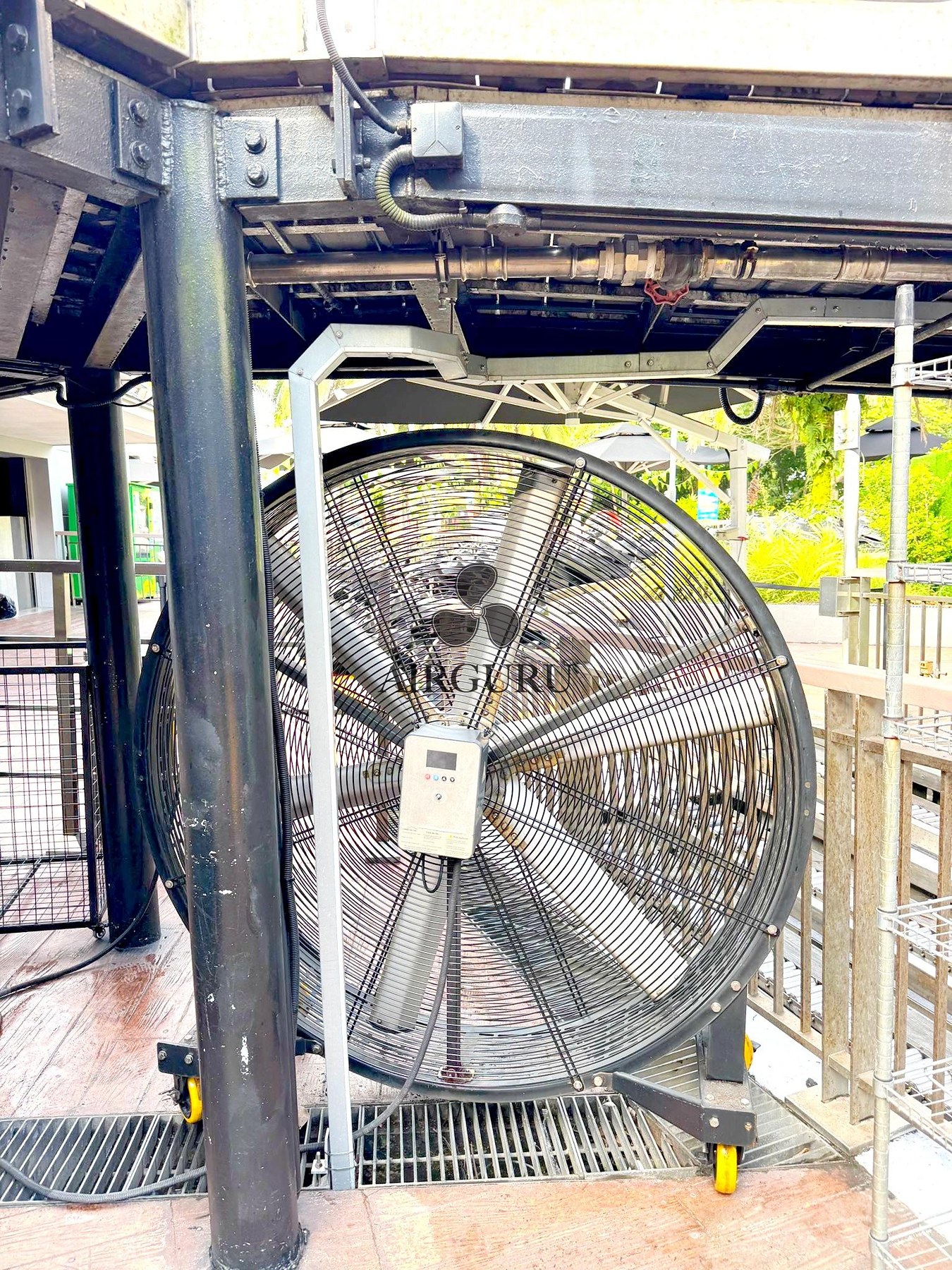
Does a fan cool the air or move it?
A fan moves air; it does not refrigerate it. That distinction matters when your brief is to lower a room’s temperature rather than improve air movement where people are standing or sitting. The US Environmental Protection Agency’s heat and indoor-air guidance explicitly distinguishes portable fans from equipment that cools indoor air.
For an event enquiry, describe where the guests or staff will be, not just the overall venue size. A registration desk, a waiting area and a dining space have different patterns of use. Explain whether the people using the area will stay in one place or move through it.
Air Guru’s industrial giant fan rental service is a starting point when you want to discuss air movement. Ask about the proposed model, placement and operating arrangements. Do not infer its reach from blade diameter in a photograph or assume a fan can replace air conditioning.
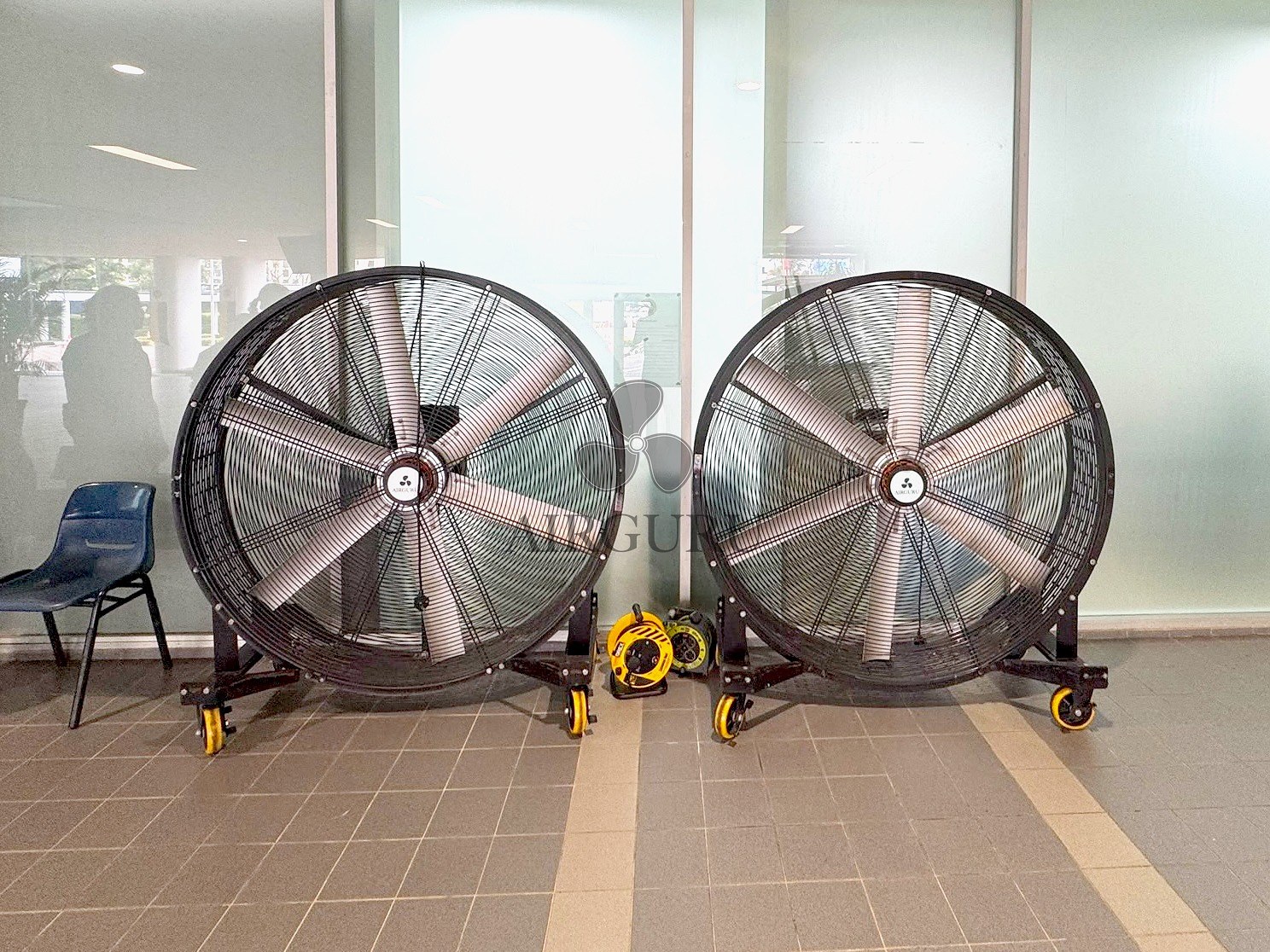
Is an air cooler the same as portable aircon?
No. An evaporative air cooler uses water evaporation, while an air conditioner uses a refrigeration process. The names are sometimes used loosely in enquiries, so confirm the equipment category rather than relying on the word “cooler” alone.
The Australian Government’s heating and cooling guidance explains that evaporative cooling becomes less effective on humid days. That is relevant general guidance when comparing options; it is not a performance rating for any Air Guru model. Avoid assuming that adding water or choosing a larger unit guarantees a particular temperature reduction.
When discussing air cooler rental, tell the team whether the area is open-sided, partly enclosed or enclosed. Ask which cooling method the proposed unit uses and what ventilation and water arrangements it requires. A photograph of a grille and control panel cannot answer those questions by itself.
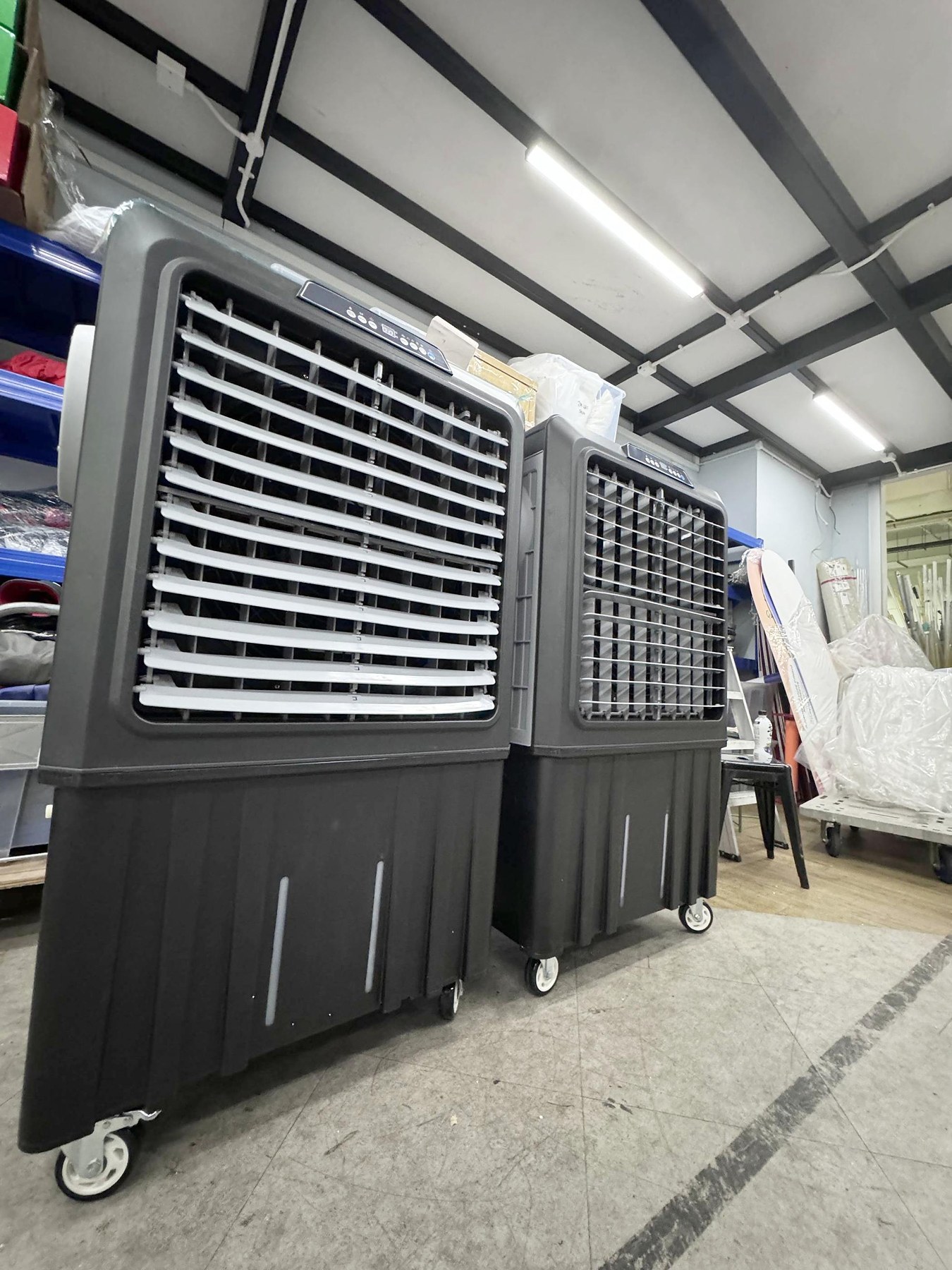
When should you ask about portable aircon?
Ask about portable aircon when your brief requires more than air movement, particularly if you have a defined area or position to discuss. Explain the actual space and desired outcome so the team can assess whether a portable unit is appropriate. Do not translate a photograph of directional outlets into a promise to cool an entire hall.
The portable aircon rental page gives you the relevant service category for that conversation. Ask how the selected unit handles its exhaust and condensate, what power supply it needs and which clearances must be maintained. These details depend on the model and should be confirmed before the equipment position is agreed.
If the proposed location has doors opening frequently, an exposed side or equipment producing heat nearby, include those details in the enquiry. They describe the conditions the supplier needs to assess. Avoid promising guests a target temperature until the actual setup and operating expectations have been agreed.
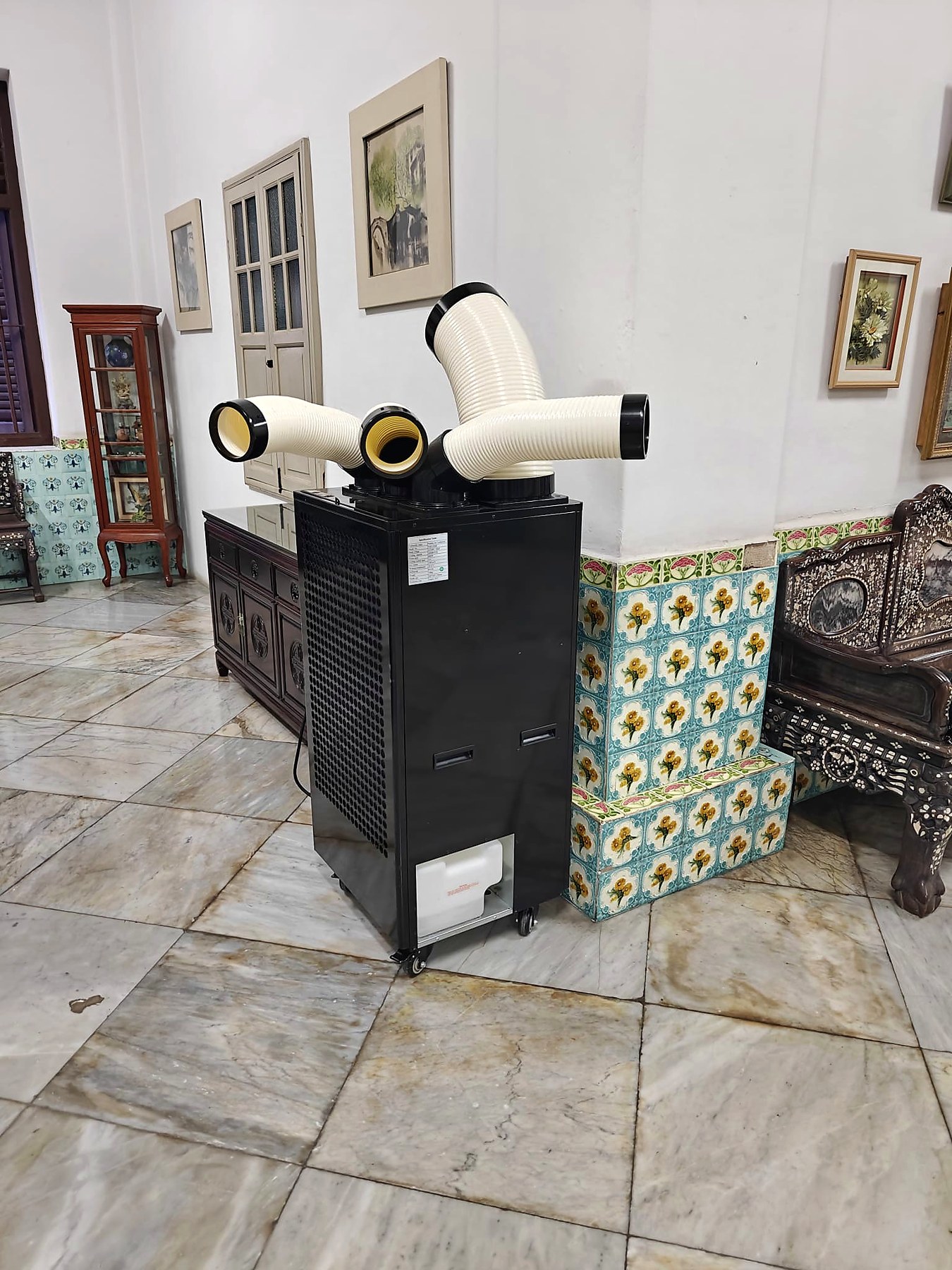
What changes between an open event area and an enclosed room?
The degree of enclosure changes the questions you need answered. For an open area, explain where people gather and how exposed the location is. For an enclosed room, provide the room layout and ask the team to assess the proposed cooling method and installation arrangements.
A canopy is not the same as a room with walls and doors. Show its open sides, surrounding obstructions and the position of tables, counters or seating. A wide photograph is more useful than a close-up of the empty corner where you hope to place a machine.
For an indoor event, mention the existing air-conditioning arrangements and whether the additional equipment is intended for a specific area. That keeps the enquiry focused on the actual problem. A supplier needs a clear description of what is already available before discussing supplementary equipment.
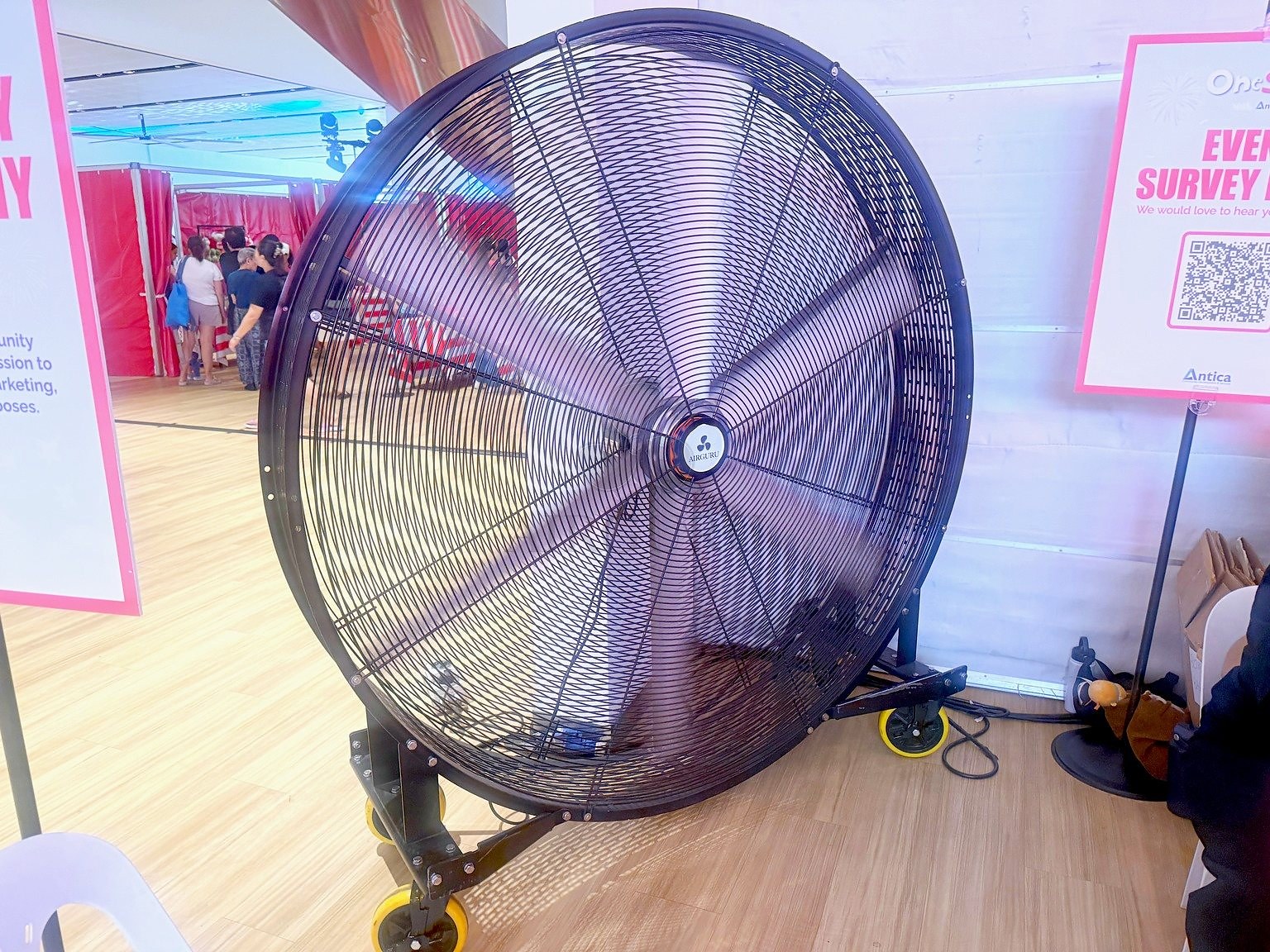
What information should accompany a cooling enquiry?
Send the event date, location, operating hours and a description of the area that needs attention. Include photographs and available measurements, then explain whether your priority is air movement or a cooling requirement that needs assessment. This gives the team a practical starting point without inventing a universal equipment-to-guest ratio.
The equipment’s operating location and delivery route are separate considerations. Show doorways, lifts, steps and any changes in floor level along the route. Ask the supplier to confirm the access requirements for the proposed model instead of assuming that wheels make every route suitable.
Before confirming the booking, ask for a clear list of the equipment and services included. Establish who will handle setup, operating instructions, any water or condensate requirements, and collection. Do not assume a photograph establishes the staffing or accessories included in a rental.
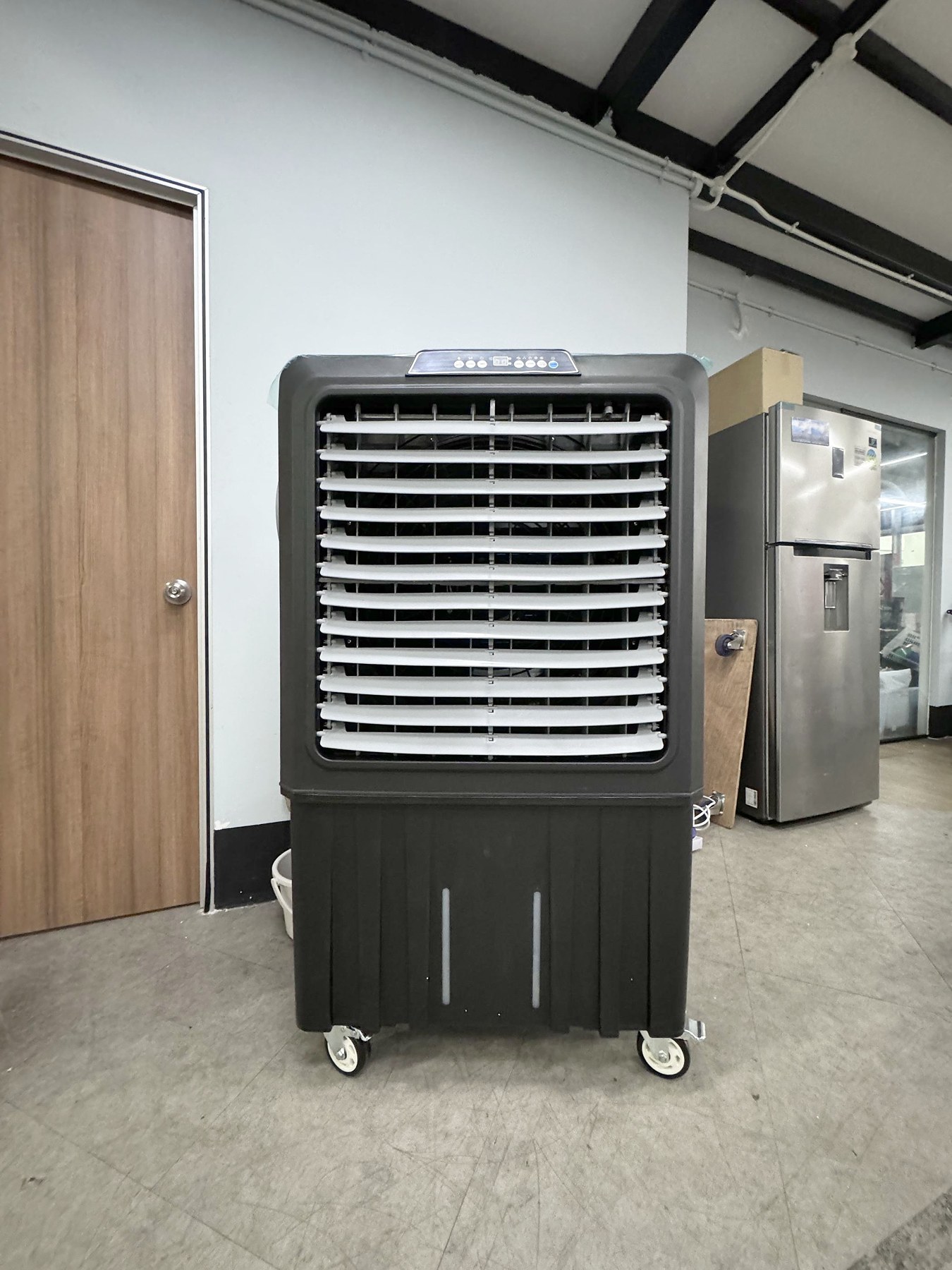
Compare equipment details in these photographs
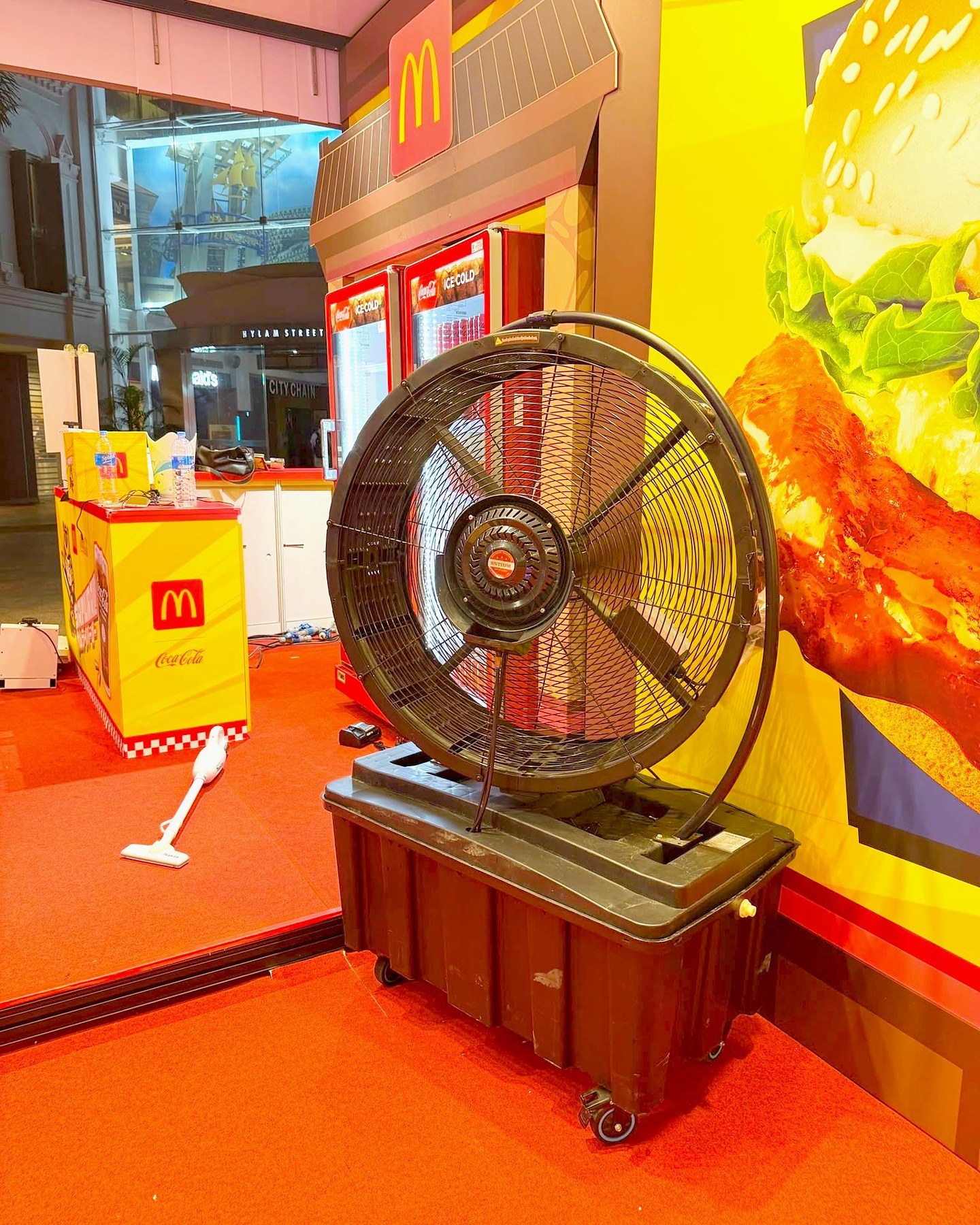
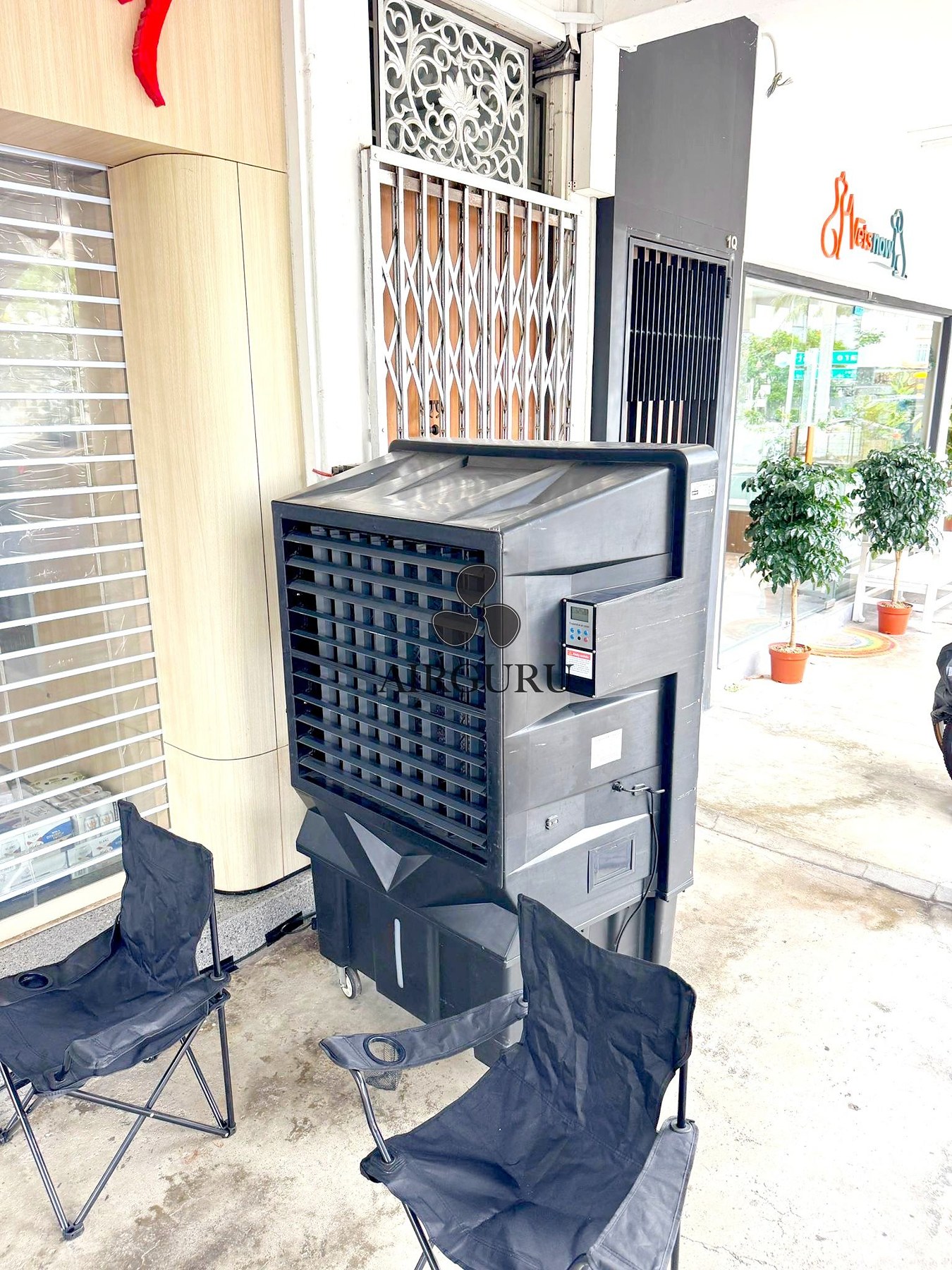
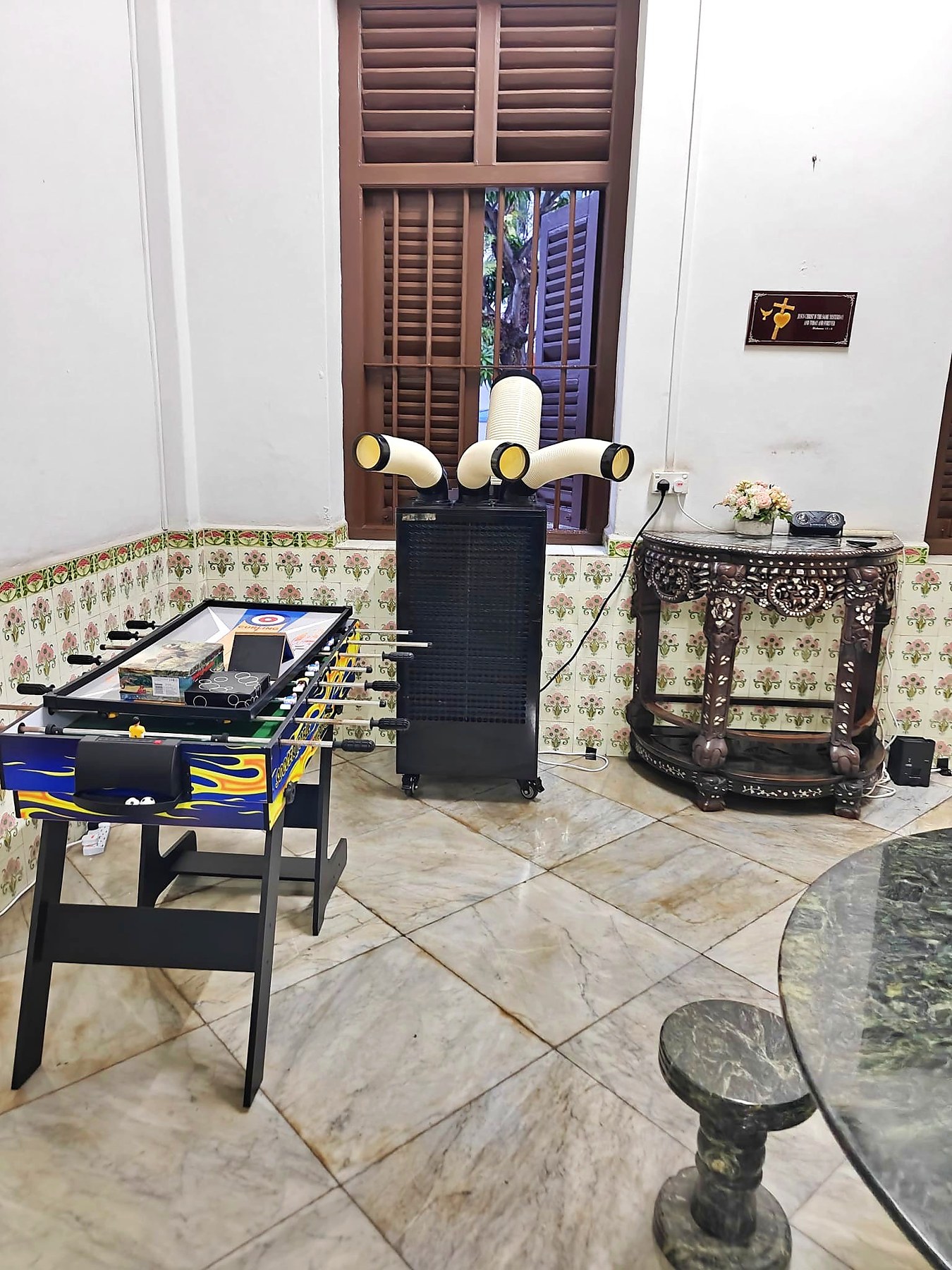
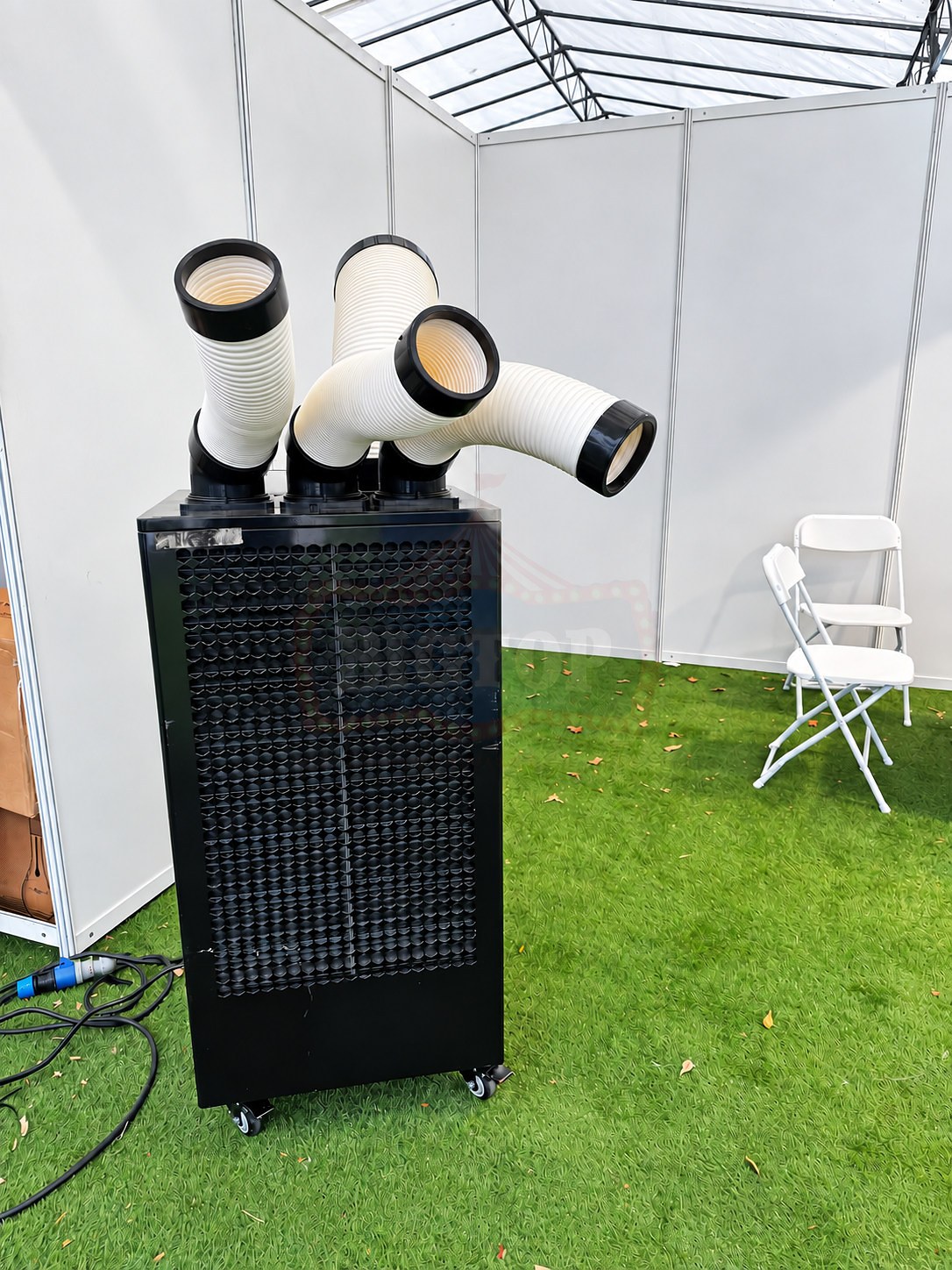
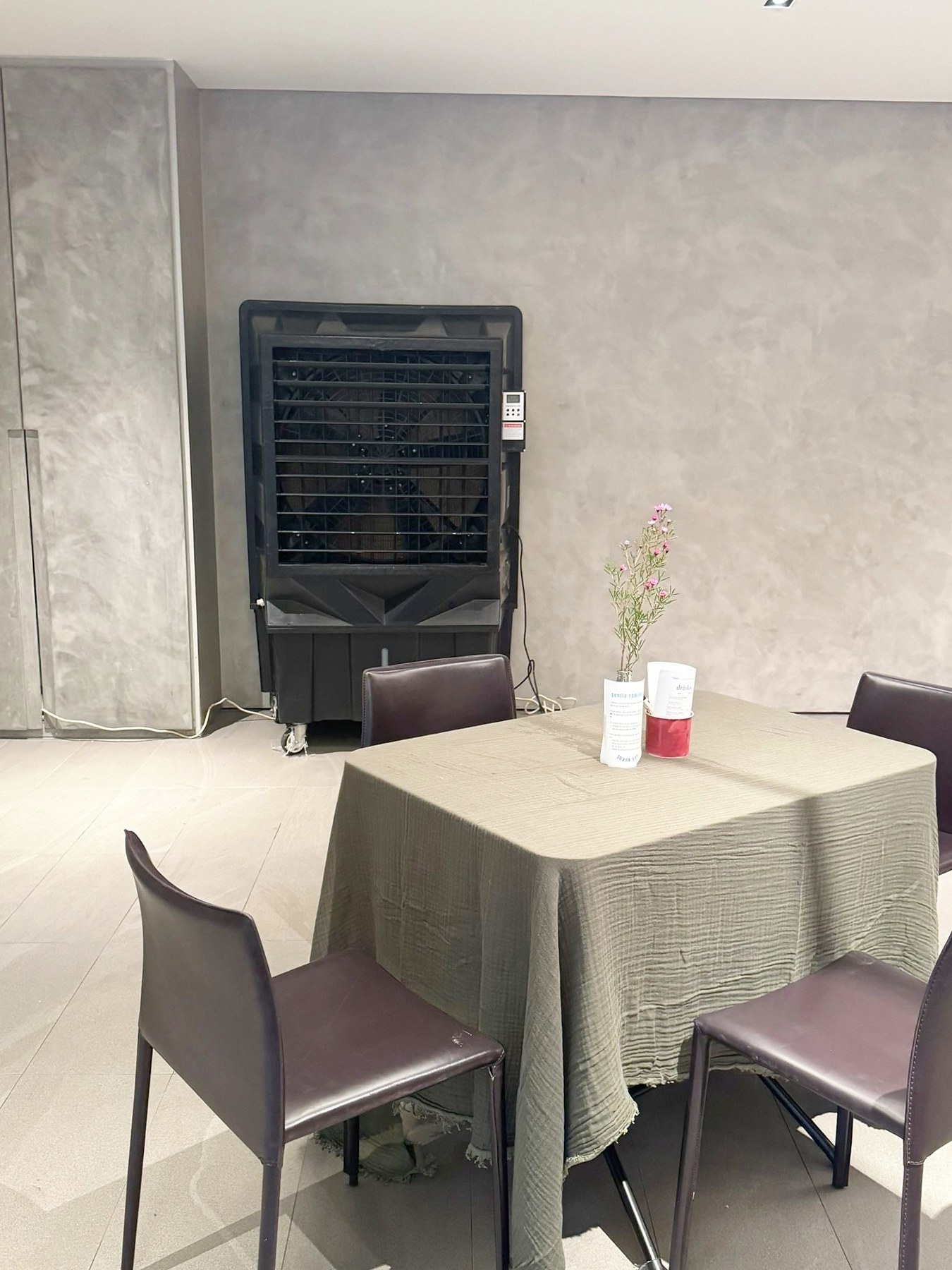
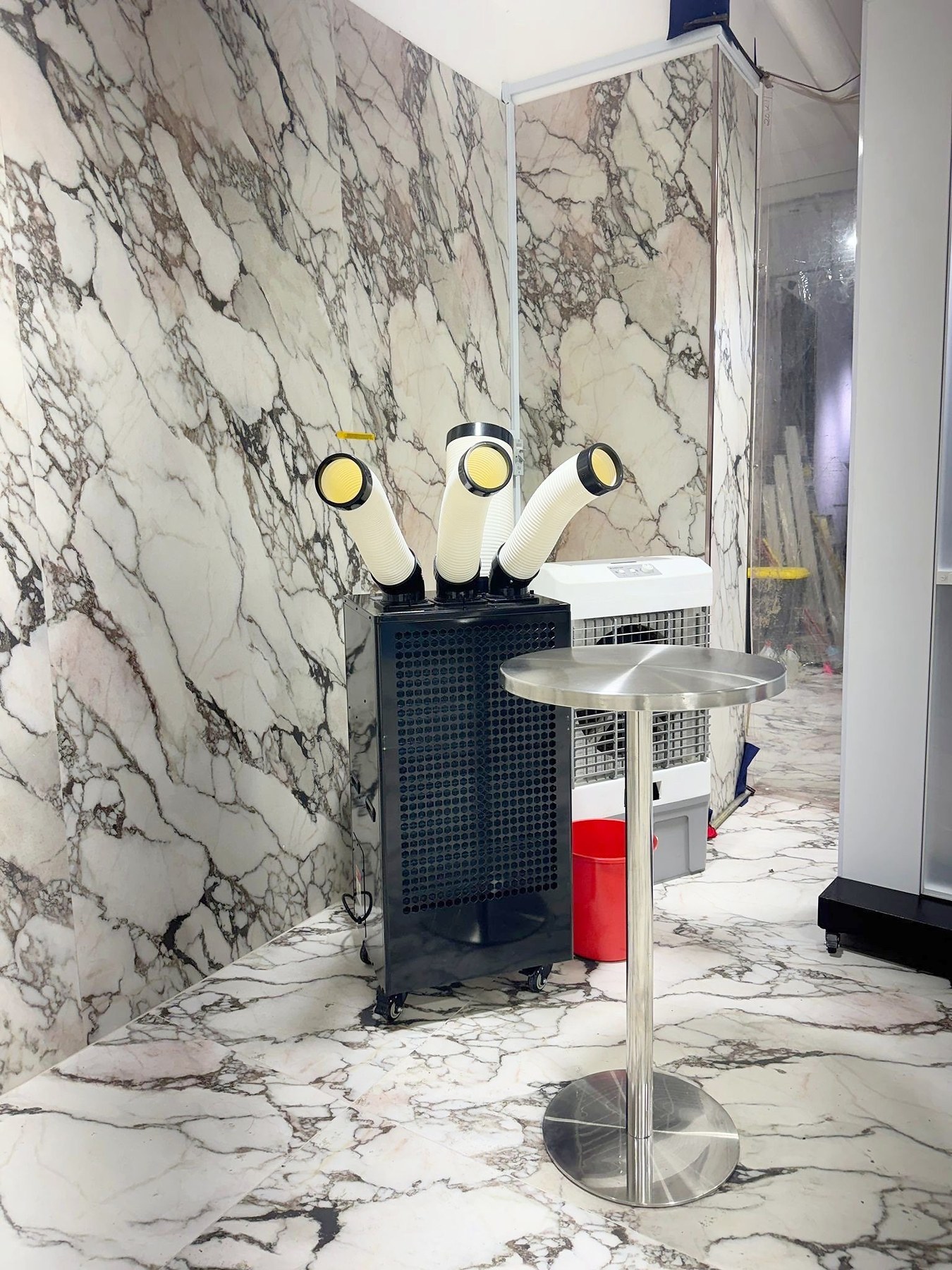
The gallery shows different cabinet forms, directional outlets and installation surroundings. Use it to identify the reference you mean when speaking with the team. Some images show similar equipment from another angle or in another location, helping you describe the proposed position more clearly.
Look beyond the front of the machine. The space beside and behind it, nearby furniture and access route all belong in your discussion. Confirm the actual operating requirements with Air Guru; the photographs do not replace equipment specifications or instructions.
Frequently asked questions
Is an air cooler the same as an air conditioner?
An evaporative air cooler and a refrigerated air conditioner use different cooling methods. Confirm the type of unit being proposed rather than relying on a general label. Air Guru offers both air cooler and portable aircon service categories for an equipment discussion.
Do fans lower the room temperature?
Fans move air rather than refrigerating it. If lowering the temperature is your requirement, explain that clearly to the supplier instead of asking only for a fan. The choice should follow the intended outcome and the conditions of the area.
Can evaporative coolers work in humid conditions?
Their effectiveness is reduced on humid days, according to the Australian Government guidance linked above. That makes the environment an important part of the selection discussion. Ask the team to assess the proposed location rather than assuming all cooling equipment performs the same way.
How many units will my event need?
The number cannot be established from headcount alone. Share the layout, available measurements and the areas where people will gather. Ask Air Guru to recommend the equipment after reviewing that information; this guide does not offer an unsupported coverage formula.
What should I confirm before booking?
Confirm the equipment model, installation position, access, power and the services included in the agreed scope. Ask about any model-specific water, exhaust or condensate arrangements. Keep those details with the booking information so the organiser and venue contact understand the proposed setup.
To discuss event cooling equipment for your Singapore gathering, contact Air Guru with your date, location photographs and cooling priorities. The team can review your enquiry and discuss the appropriate equipment options.